





Leaks and floods ignore the clock. Picture a supply line bursting at 2am: the longer it runs, the further the water reaches. In West Valley City, we pick up emergency calls around the clock. Someone from our team answers, runs through a short set of questions, and sends help. Our only job on the initial visit: shut down the water and hold the damage where it is.
Here is what happens when you call. You will be asked about the source of the water, whether it has stopped, and if the power poses a risk. Should the main shutoff be accessible, our team explains over the phone how to close it. On site, the crew locates the source, uses moisture meters to see which rooms are wet, and begins extraction. Your furniture and other items are relocated or raised above the damp flooring.
The reason to move quickly is that this kind of damage keeps advancing with time. Within hours, water climbs up into the drywall. Cupping shows up in wood flooring. Give damp materials 24 to 48 hours and mold can take hold. Leave it until after the weekend and the project tends to be bigger, longer and more expensive than one started that night. If you are not sure it is an emergency, call and we will tell you honestly.
How to Prevent Emergency Water Damage Restoration Problems
A little prevention goes a long way in avoiding expensive restoration emergencies. Follow these tips from our IICRC-certified technicians:
- Swap worn hoses feeding the washer, sinks and toilets rather than waiting for a rupture.
- Find your main water shutoff today and make sure everyone in the house can close it.
- Being able to find the electrical panel quickly means wet areas can be de-energized without risk.
- Put leak alarms beneath sinks and beside the dishwasher, washer and water heater.
- Run a check on the sump pump ahead of wet weather, and think about adding battery backup.
- Going away longer than a few days? Close the main water valve first.
Emergency Water Damage Restoration Issues? We Can Help.
Call West Valley City Restoration for fast, reliable service.
Get Help: (754) 342-6491Emergency Water Damage Restoration: DIY or Professional?
Some simple tasks are suitable for DIY, but most water damage work benefits from professional tools, training, and experience. Here's a comparison:
| Factor | DIY Approach | Professional Service |
|---|---|---|
| Furniture and belongings | Moving what you can lift yourself | Belongings lifted clear by the team |
| Extraction speed | Bucket by bucket with a household vac | Hundreds of gallons out by truck unit |
| Moisture you cannot see | Only what your eyes and hands catch | Moisture meters and thermal imaging |
| Drying equipment | A couple of household fans | Commercial air movers and dehumidifiers |
| After-hours response | You, a mop and towels | Trained crew on call any hour |
Why Emergency Water Damage Restoration Is Not a DIY Job
In an emergency, the hard part is not mopping up what you can see. It is knowing where the rest of the water went. Water runs under baseboards, into wall cavities and beneath flooring within minutes. Meters and thermal imaging show us the wet spots hidden from view, which means they get handled that night rather than surfacing weeks on as a stain or a smell.
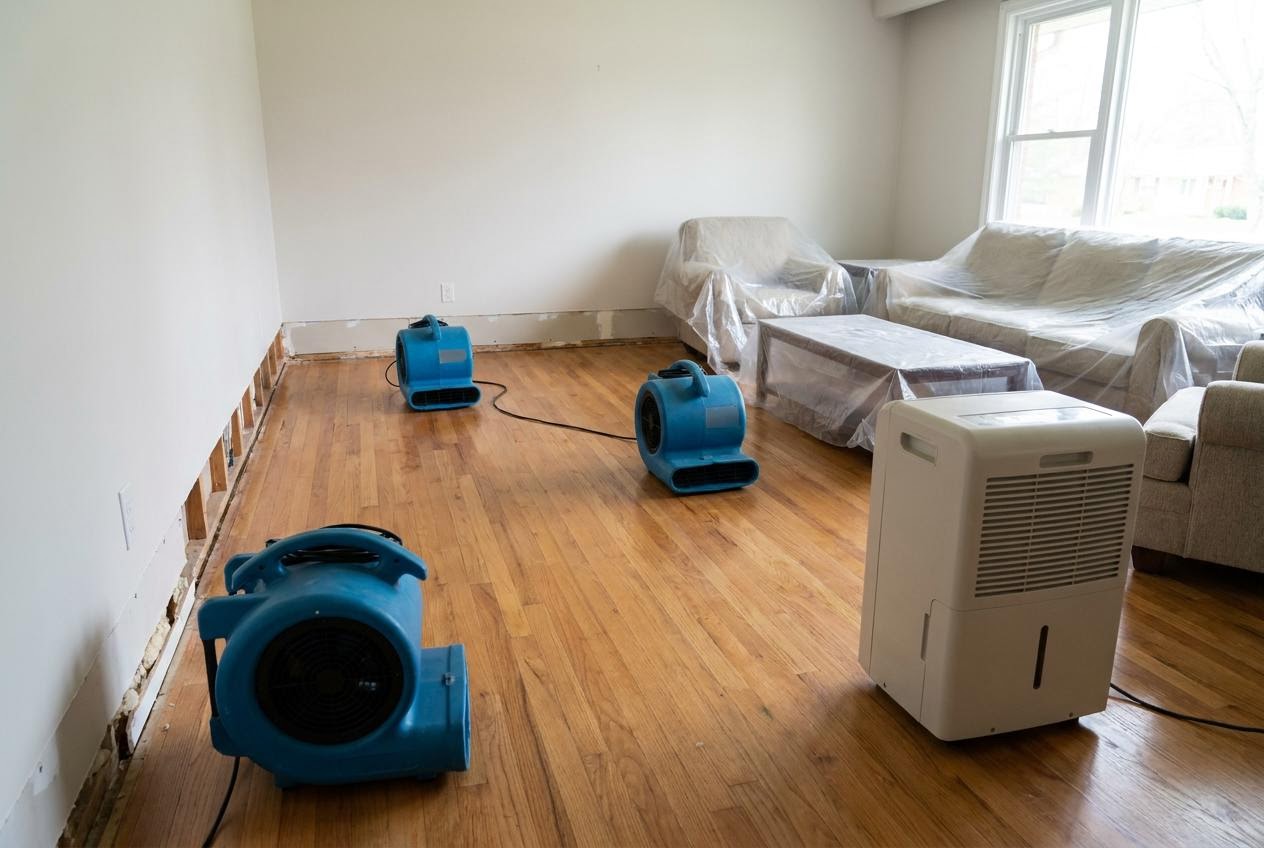
Truck-mounted extractors, commercial-grade air movers and dehumidifiers matched to the room come with the crew, and no household keeps those around. We know how to work safely around wet wiring and contaminated water, and we document everything with photos and moisture readings from the first hour. When it comes time to file a claim, that documentation helps. From the first night to a dry house, a single crew stays on your job.
Signs It Is Time for Emergency Water Damage Restoration
Catching these issues early helps you avoid costly problems and protect your property. Watch for these telltale signs that professional help is needed:
- A water heater tank has failed and is emptying across the floor.
- A ceiling is sagging or bulging with trapped water above it.
- The water keeps running, and the shutoff valve is out of reach or nowhere to be found.
- The house was flooded when you walked in, with no telling how many hours it had been going.
- Walls on the lower floor are wet from top to bottom because of a leak overhead.
- You see water escaping around a light fitting, from a wall outlet or through the ceiling.
- Pooled water is creeping over the floor into neighboring rooms or onto the staircase.
Act Before It Gets Worse
Many water damage problems start small but can escalate quickly into costly emergencies. If you notice any of these signs, contact West Valley City Restoration at (754) 342-6491 for a prompt evaluation.
Questions About Emergency Water Damage Restoration?
Call West Valley City Restoration to discuss your emergency water damage restoration needs with a IICRC-certified technician.
Call (754) 342-6491 TodayYour Emergency Water Damage Restoration Questions Answered
Emergency Water Damage Restoration, Step by Step
Our systematic approach delivers quality results on every project. Here's how we handle emergency water damage restoration from start to finish:
Take Your Call
A person answers at any hour, asks about the source, the rooms affected and any safety concerns, and tells you what to do while a crew is on the way to your home.
Shut Off the Water
Once on site, the crew looks for electrical and contamination risks before closing off or isolating the supply behind the leak. Nothing else works until the flow has stopped.
Extract the Water
We pull standing water with pumps and truck-mounted extractors, move furniture out of wet areas, and map hidden moisture in walls and floors with meters and thermal imaging.
Stabilize and Plan
Before leaving, we place dehumidifiers and air movers. Then you get a rundown of our findings, how the coming 3 to 5 days of drying will go, and the items your insurer is likely to request.
Talk to a Emergency Water Damage Restoration Expert
Don't let water damage problems get worse. Call West Valley City Restoration now for prompt, professional service.
Call (754) 342-6491 Today